

Tata Harrier EV
Overview
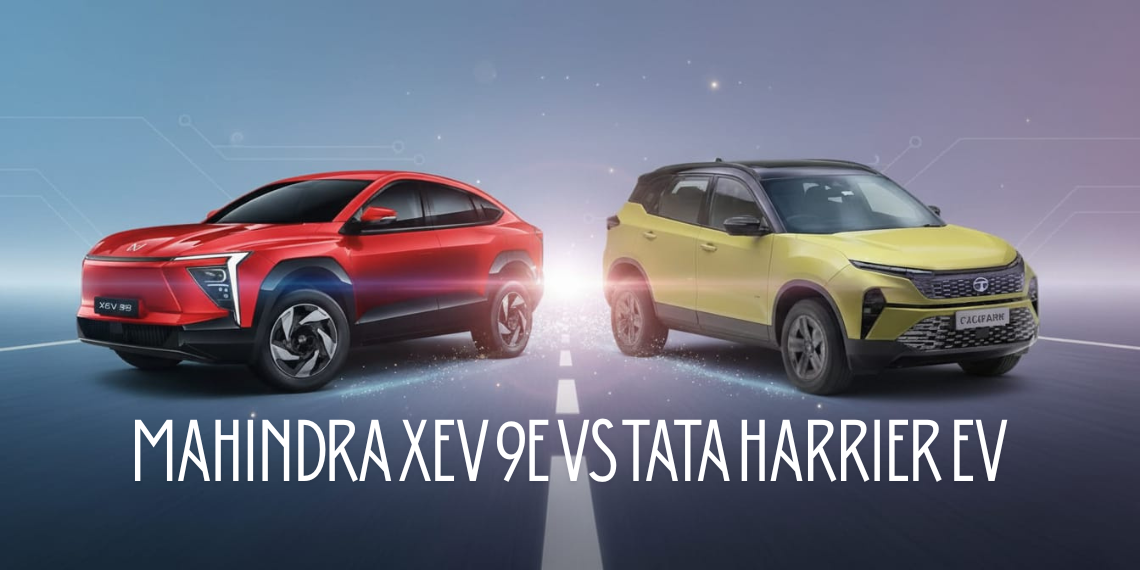
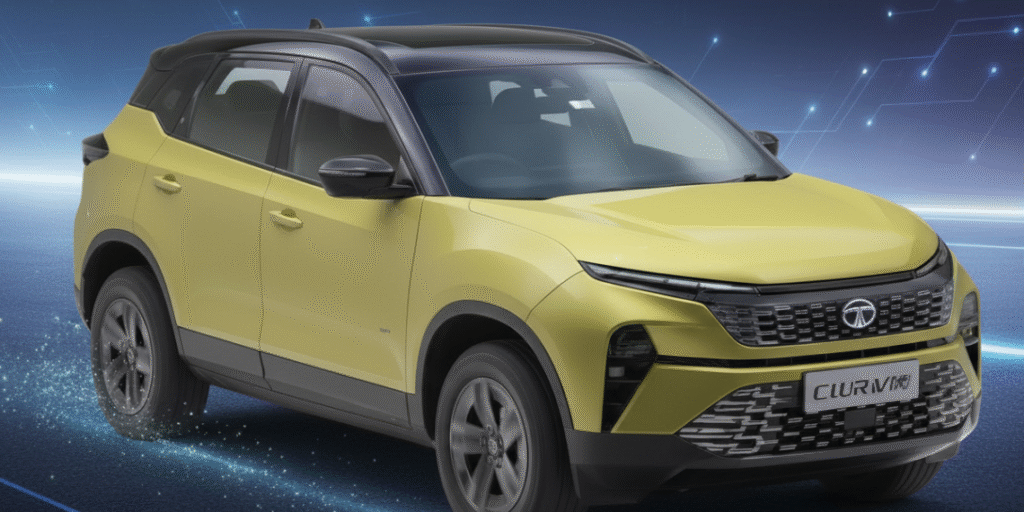
The Tata Harrier EV is the electric SUV from Tata-Motors, built on its acti.ev Plus platform. Key specs in brief:
- Battery options of 65 kWh and 75 kWh LFP.
- Claimed MIDC range up to 627 km.
- 0-100 km/h in about 6.3 seconds (for the top or dual-motor variant).
- 5-star rating by Bharat NCAP.
- Pricing (ex-showroom) starts around ₹21.49 lakh (for the base variant) in India.
Strengths
- Strong range for the price segment—627 km still impressive.
- Tata’s safety credentials are good; 5-star NCAP gives confidence.
- The architecture (acti.ev Plus) is oriented for EV, so one expects modern EV features.
- Performance (especially in higher spec) is quite competitive.
- Well-known brand in India with established service network, which matters for EV adoption.
Weaknesses / Considerations
- While the range claim is strong, real-world range will be lower; buyers must check usage scenario (city vs highway) and conditions.
- Charging infrastructure still improving in India; fast-charging performance and availability will matter.
- Interior quality (plastics, finishing) has been flagged in reviews. For example, one review said: “The suspension is the standout highlight… but it’s let down by interiors, plastics…”
The base variant may have fewer premium features compared to rivals.
Mahindra XEV 9e
- Overview
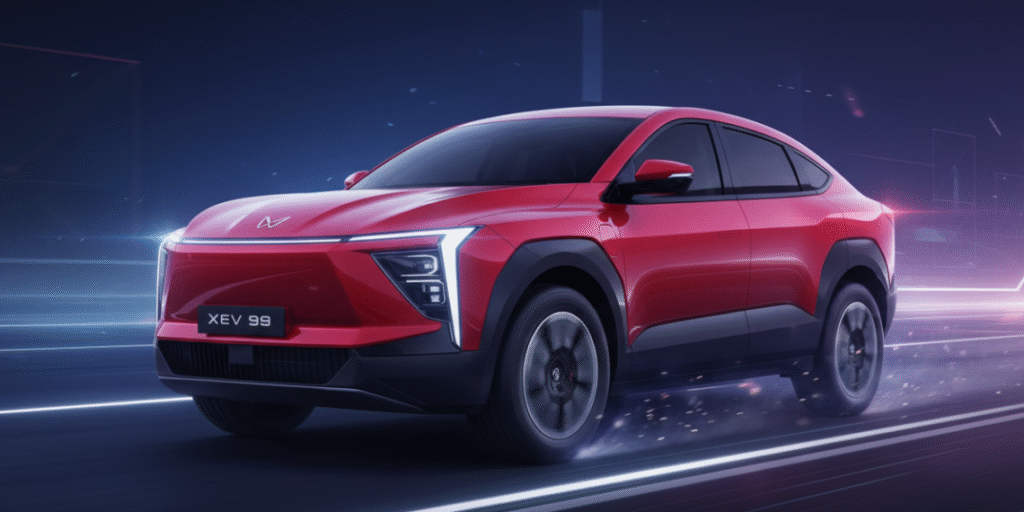
- The Mahindra XEV 9e is the electric SUV from Mahindra & Mahindra, based on their INGLO platform (for EVs). Key specs in brief:
- Battery options: 59 kWh and 79 kWh LFP.
- Claimed MIDC range: 542 km (59 kWh) up to 656 km (79 kWh).
- 0-100 km/h acceleration claimed around 6.8 seconds (for higher battery variant) per wiki data.
- Price (ex-showroom) starts around ₹21.90 lakh for base variant.
- Packed with features: e.g., 16-speaker Harman Kardon audio system, advanced ADAS, 360° camera etc.
- Strengths
- Excellent battery/range numbers in its class — 656 km claim is very competitive.
- Rich feature list: strong infotainment & premium audio, advanced driver aids.
- Rear-wheel-drive (RWD) architecture gives nice handling dynamics for an SUV.
- Good value for money when you consider premium equipment + EV architecture.
- Being a newer dedicated EV platform, potentially more future-proof in terms of architecture.
- Weaknesses / Considerations
- As with any EV, infrastructure and charging ecosystem will influence ownership experience.
- While the claimed range is strong, real-world may vary (load, driving style, climate).
- Service and parts network for newer models may not be as mature as longer-established ones, although Mahindra has a wide network.
- Top spec variants may push the price up significantly—one must check overall cost of ownership.
- Some reviewers point out the styling (approach, materials) may have compromises given the value orientation.
Head-to-Head Comparison: Which is Better?
Here’s how they stack up side by side:
|
|
|
|
|
|
|
|
|
|
|
|
|
|
|
|
|
|
|
|
|
|
|
|
|
|
|
|
|
|
Our Verdict: Which to Choose?
In a nutshell: it depends on what your priorities are. Here’s how I’d summarize for a buyer in India:
If you prioritise raw feature content, top-range capability, and a somewhat premium “feel”, the Mahindra XEV 9e edges ahead. Its longer claimed range, rich tech kit, and dedicated EV architecture make it very compelling.
If you prioritise a well-balanced package with strong reliability, broad service network, and slightly more conservative investment, then the Tata Harrier EV is an excellent choice. It offers strong value, very good range, and the strength of the Tata brand.
My recommendation:
For family use (city + highway) with occasional long trips and you want a “premium” feel: go for XEV 9e (especially the 79 kWh variant if budget allows).
For practical, well-rounded ownership with good value, firm safety credentials and the brand backing: go for Harrier EV.
Other considerations before buying:
Check real-world range reviews (especially in Indian conditions: heat, AC usage, highway speeds).
Evaluate the charging ecosystem where you live / plan to travel: fast-charger availability, home-charging setup, incentives.
Consider resale value, warranty on battery pack, servicing costs for high-tech features.
Look at variant-by-variant pricing: the base variant vs upgraded variant makes a big difference in cost and features.
Test-drive both! The driving feel, ergonomics, build quality will matter in daily use.
Final Word
- If I had to pick a “better” one overall, I’d lean slightly in favour of the Mahindra XEV 9e, simply because it pushes the envelope a bit more in range and features at competitive pricing. However, the Tata Harrier EV is by no means far behind—it is likely the more practical, sure-bet choice for many buyers today.
- If you tell me your budget, usage pattern (city vs highway), and priorities (range vs features vs cost vs brand), I can help you decide which specific variant of each (battery size, trim) might make more sense for you. Would you like that?
GaadiBuzz brings the latest car reviews, news, and comparisons — fast and simplified.
Upgrade your drive with smarter decisions.